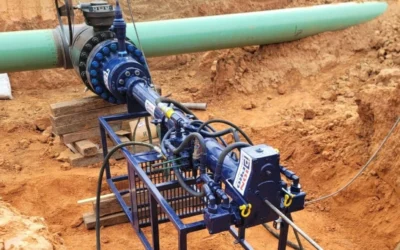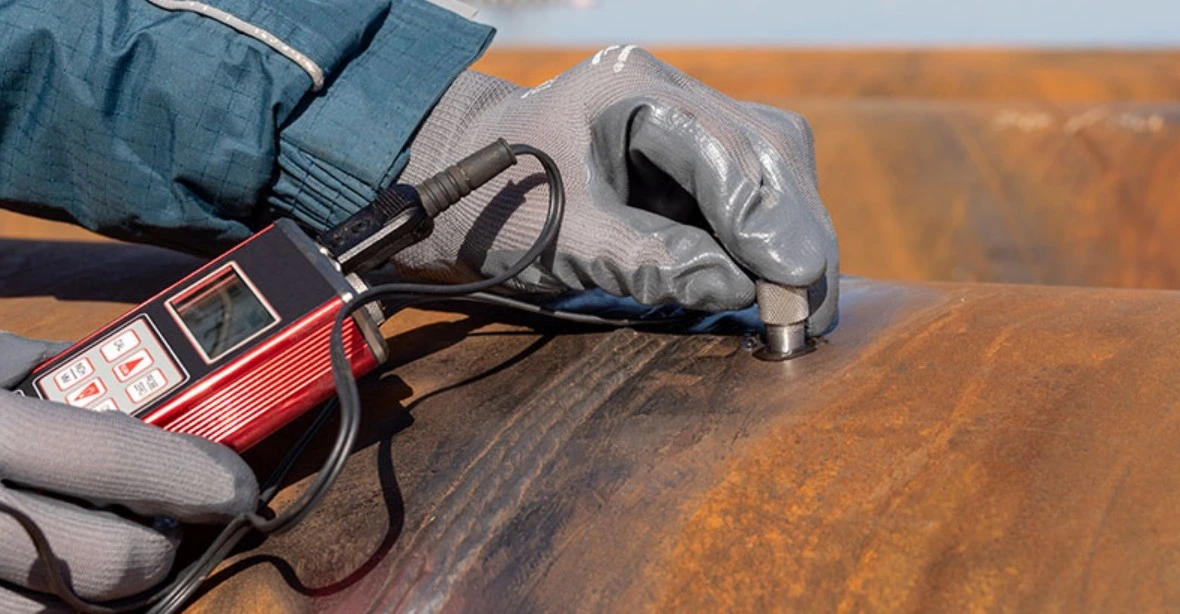
Baseline inspections are critical assessments and examinations performed before placing equipment (asset) into its intended service, which establish a reference point for evaluating the asset’s condition and its integrity.
Most of the industrial infrastructures (i.e., processing plants, manufacturing plants, blending plants, pipeline networks, forging/smithing plants, etc.) are being built in challenging environments, and the importance of accurate, early-stage assessments has never been greater than before.
These inspections usually involve initial evaluation and assessment of all sorts of materials, components, or systems in place to determine their condition at the outset of their lifecycle.
It can be performed at a fabrication facility or in the field before commissioning. This process is essential in various industries, including oil and gas.
The American Petroleum Institute (API) 570 & 510 requires inspection of in-service equipment; however, this does not rule out the sole importance of baseline since much of the information obtained during such inspections is extremely useful, if not critical.
Why does a detailed baseline matter?
Detailed baseline inspection serves as the crucial first step in the integrity management process, offering a deeper understanding of asset conditions, vulnerabilities, and potential failure points. Additionally, this assessment aims to confirm an asset’s total integrity.
At BVC, we specialize in conducting thorough inspections to help our clients understand their assets, challenges, and objectives. With a multidisciplinary team of engineers and technicians, we conduct a holistic assessment of your asset’s integrity.
Where does the data for the baseline come from?
Baseline surveys are a critical component of asset integrity management, providing essential data to ensure the long-term safety and reliability of the asset. The result of the inspection represents a start-to-life assessment of an asset.
Most common sources of data during the inspections come from
- Documentation and Records (design document, QAQC, management of change/pre-safety review of asset installation, etc.)
- Codes and standards.
Significance of baseline inspection
Such inspection helps in establishing the initial condition of assets, allowing for the detection of any existing defects or flaws. Through baseline, future inspection will help in determining the rate of degradation or identifying any changes that may occur to the assets over time.
The most important significance of all is that it provides a foundation for the development of an effective maintenance and inspection program, determining the appropriate intervals for maintenance/inspection for each asset.
Baseline assessment helps in identifying safety hazards and performance-related issues, assuring the safety of the infrastructure.
Best time to conduct baseline
By definition, a baseline should be carried out before commissioning to assist you in planning your maintenance activities. However, that isn’t the case for some infrastructure projects. There isn’t a one-way answer as to when is the best time to carry it out as the baseline. It can be carried out even in operating assets.
The information obtained from the baseline will set the basis for maintenance and provide you with detailed information regarding your assets since the reports will come with key findings, recommendations, and risk mitigation strategies, enabling you to make an informed decision.
Technologies for baseline and selections
There are several technologies deployed in conducting baseline inspections. These include acoustic resonance testing (ART), ultrasonic testing (UT), magnetic flux linkage (MFL), radiography, and other NDT methods.
The selection of a particular technology for baseline relies on;
- Expected integrity threats and their criticality in terms of economic, environmental, or safety impact.
- Future operating conditions of the asset
- The assets’ external and internal conditions, i.e., potential anomaly types, operational parameters, etc.
After selection, consistency is very important. Running the same tool type for baseline and subsequent inspections ensures accurate comparisons, securing the baseline data. The right technologies (tools) ensure that there is accurate detection and sizing of the threat/condition.
Summary
Baseline inspections are essential for establishing the initial condition, identifying potential issues, and providing a foundation for future monitoring and maintenance. Making its importance in the life cycle of any asset, infrastructure, plant, or industry.
These assessments are encouraged to be conducted as a pre-commissioning activity. However, the assessments can be conducted even if the assets are in-service since the baseline data remains critical in its long-term integrity management.
With a focus on innovation and reliability, BVC delivers holistic baseline & in-service/routine inspection services, empowering clients to safeguard their assets, optimize performance, and achieve operational excellence in a challenging industry landscape.